
Deep plane facelift - advanced technique for significant, natural-looking facial rejuvenation
3.11.2026

When the face ages, it is not only the skin that changes. Over time, the cheeks gradually descend, the jawline loses definition, soft tissues shift downwards and the face can begin to look more tired, heavier and older than the person actually feels.
This is also one of the most common reasons why patients come to us for a facelift consultation. They often tell us that they do not want a “different face”, but would simply like to see a younger version of themselves again - a face that is closer to how they looked ten or fifteen years ago.
With a deep plane facelift, this is exactly what we aim to achieve. The procedure is not simply about tightening the skin, but about repositioning the deeper facial tissues into a more youthful position. This allows us to lift the cheeks, redefine the jawline, reduce sagging in the lower face and rejuvenate the face as a whole.
In a properly selected patient, the effect can be very significant. The face can often appear approximately 10–15 years younger, while still looking natural rather than “operated on”. The key is to preserve the characteristic features and identity of the face while correcting the changes that have developed over time.
Why does the face change with age?
Facial ageing is much more complex than simply developing wrinkles. If we focus only on the skin, we see only one part of the process. Over time, the quality of the skin changes, subcutaneous fat shifts, facial fat compartments move, retaining ligaments loosen, the SMAS layer changes and the bony support of the face also gradually evolves. As a result, facial tissues slowly descend.
The cheeks lose their higher, more youthful position, jowls may develop along the lower jaw, the jawline becomes less defined and the transition between the face and neck becomes less distinct. This is why a facelift is not a procedure where simply removing excess skin is enough. If the main problem lies in the deeper structures, that is where we need to work.
What is a deep plane facelift?
A deep plane facelift is a technique in which we work in a deeper anatomical plane beneath the SMAS layer. SMAS stands for superficial musculoaponeurotic system. It is a fibromuscular layer beneath the skin that plays an important role in supporting the soft tissues of the face. During a deep plane facelift, we release selected retaining ligaments that limit the mobility of tissues that have descended over time.
Once these structures are released, we can reposition the cheeks, lower face and other soft tissues into a more youthful position and secure them there. This is also the main difference compared with older facelift concepts where the emphasis was mainly on tightening the skin. With the deep plane technique, we aim to create the main change in the deeper tissues, while the skin simply adapts to their new position. This allows us to achieve a substantial change without making the face look excessively tight.
Why can the result be significant and still look natural?
There is often a misunderstanding when we talk about a “natural result”. Natural does not mean that the change has to be small or barely noticeable. With a deep plane facelift, rejuvenation can be quite significant. The cheeks can be restored to a higher position, the lower face becomes cleaner, the jawline more defined and the face as a whole looks lighter and younger.
A natural result means that the face remains harmonious after surgery. The eyes, mouth, cheeks and jaw should still belong to the same face the patient had before. Our goal is therefore not to make the face look unchanged. On the contrary, we do want the change to be visible. We simply want that change to look like rejuvenation rather than the result of surgery.
Deep plane facelift or traditional SMAS facelift?
Both techniques are established approaches and both can produce excellent results in properly selected patients. With a traditional SMAS facelift, we reshape, tighten and secure the SMAS layer in a more youthful position. With a deep plane facelift, we work beneath this layer and release specific ligaments, which allows us to mobilise the deeper tissues as a larger unit. The deep plane technique can therefore be especially useful in patients where we want to achieve a more pronounced effect in the midface and lower face, particularly in the position of the cheeks.
However, we do not choose the technique simply because one method is more popular or more widely discussed at a certain time. During the consultation, we assess the facial anatomy, skin quality, cheek position, jawline, neck, amount of excess skin, volume loss and any previous procedures. Only then do we decide which technique is most appropriate for that particular patient.
Who is a deep plane facelift intended for?
The best candidates are usually patients in whom the soft tissues of the face have already descended visibly and non-surgical treatments can no longer adequately correct the main problem. Typical changes include sagging cheeks, more pronounced jowls, loss of jawline definition, laxity in the lower face, deeper nasolabial folds or changes in the neck. Age itself is not the deciding factor. One person at 48 may have significantly more sagging than someone at 58, which is why we always assess the face as a whole rather than simply looking at the number in a passport.
When are fillers and other non-surgical treatments no longer enough?
In the earlier stages of ageing, fillers, biostimulators, lasers and other non-surgical methods can produce very good results. The problem begins when we try to correct a face with significant tissue descent simply by adding more volume. If the cheeks and lower face have already dropped considerably, additional filler cannot move those tissues back into their original position. Sometimes the face simply becomes fuller without actually looking younger.
At that point, it often makes more sense to change the strategy. Instead of adding more and more volume, we can lift the tissues and return them to a position that is closer to where they were years ago. This is often the point at which a facelift becomes a more logical and longer-lasting solution.
How is a deep plane facelift performed?
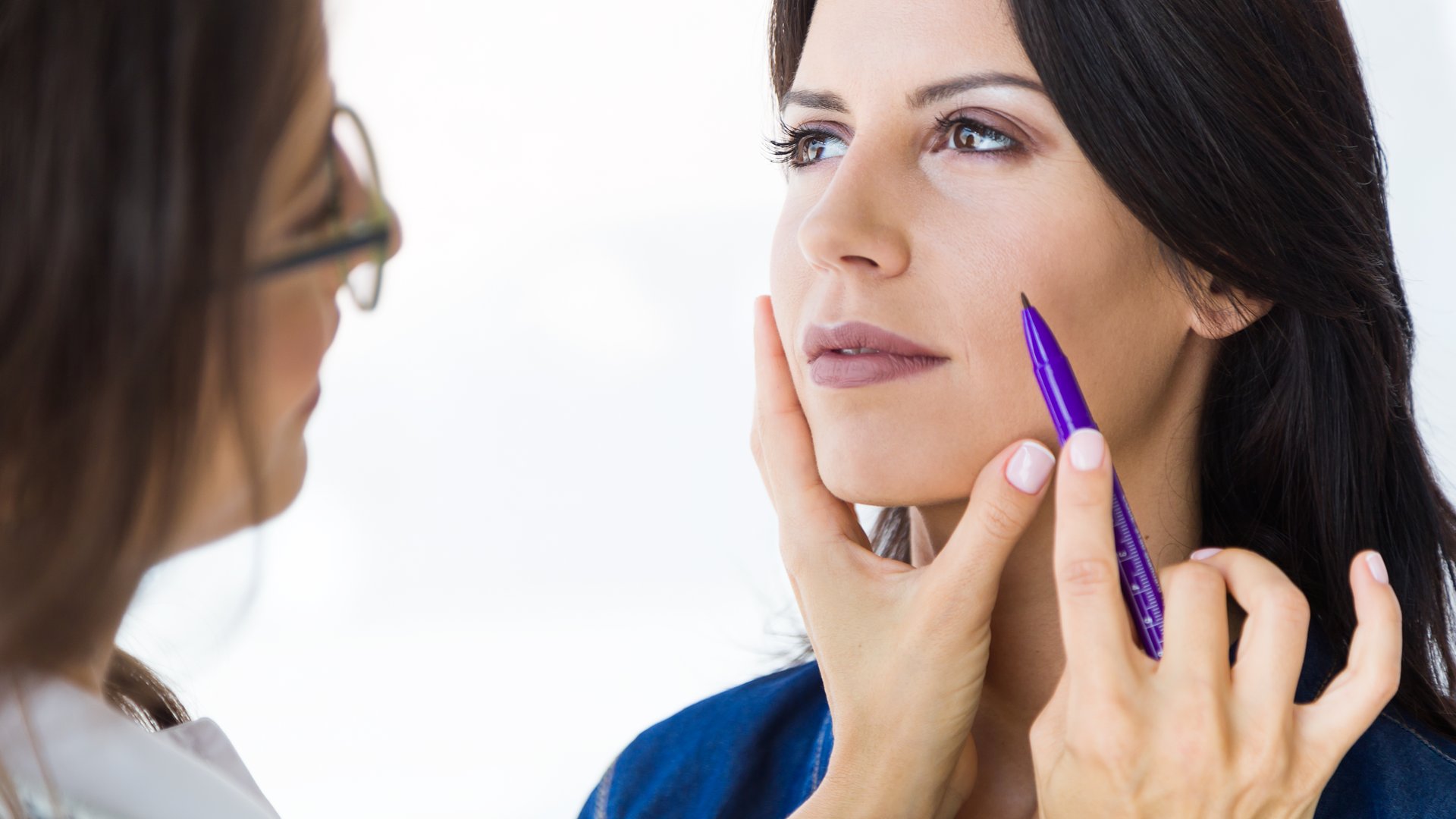
Everything starts with the consultation, where we take time to examine the face and discuss what bothers the patient and what kind of result they are looking for. We assess the position of the cheeks, jawline, skin quality, neck, volume distribution and the overall proportions of the face. Older photographs can also be very useful, because they show us the natural anatomy of the face before age-related changes occurred.
During surgery, we make carefully planned incisions around the hairline and ears. We then access the deeper facial structures, release selected retaining ligaments and mobilise the soft tissues. We reposition those tissues upwards and backwards into a position that is closer to their original, more youthful location, and then secure them there. Only after the deeper structures have been repositioned do we remove excess skin. This means that the skin itself does not have to carry the main tension of the lift. The real work is done in the deeper layers.
What can we change with a deep plane facelift?
The biggest difference is usually seen in the midface and lower face. By lifting the deeper tissues, we can restore a more youthful cheek position, reduce sagging along the lower jaw, improve jawline definition and soften deeper nasolabial folds.
If there are also changes in the neck, we often combine the facelift with an appropriate neck lift. This can improve the transition between the chin and neck and further refine the lower facial contour. It is important to understand, however, that a facelift does not address every sign of ageing. Pigmentation, fine surface lines and overall skin quality require a different approach. For this reason, we may later complement a facelift with treatments such as CO₂ laser, PRP or other biostimulatory procedures.
Can a deep plane facelift be combined with other procedures?
Yes, and in many cases it is the combination of procedures that gives the most harmonious result. Depending on the anatomy, we can combine a facelift with upper or lower blepharoplasty, a brow lift, a neck lift or facial fat grafting. In selected cases, we may later add laser resurfacing or other treatments to improve skin quality. At the same time, we always try to avoid treating every small feature simply because we can. It is more important to look at the face as a whole and choose only those procedures that will genuinely contribute to a better overall result.
What is recovery like after a deep plane facelift?
Recovery is gradual, and it is important to allow enough time for it. During the first few days, swelling, bruising and a feeling of tightness are common. Temporary changes in skin sensation may also occur. At this stage, the face does not yet look the way it will later, so it is important to understand that early swelling is a normal part of the process. After approximately ten to fourteen days, most patients already feel significantly better. After two to three weeks, many are comfortable returning to work and social activities, although some swelling may still be present.
By four to six weeks, the face usually looks much more natural. The result then continues to soften and settle over the following months, while scars also mature and fade. For this reason, we do not judge the final result after just a few weeks. A facelift needs time.
Where are the scars?
We plan the incisions so that they are hidden as discreetly as possible within the natural lines around the ears and along the hairline. At first, scars are naturally more visible, but over time they usually soften and fade. Their final appearance depends on the closure technique, the amount of tension on the skin and the individual way in which each patient heals. One of the advantages of the deep plane approach is that the result does not rely primarily on pulling the skin, so we aim to avoid unnecessary tension when closing the incisions.
How long do the results last?
A facelift does not stop ageing, but after surgery the face continues to age from a significantly younger starting point. If we manage to take the appearance of the face back by approximately ten or fifteen years, the patient will of course continue to age over the following decade. However, they will generally still look younger than they would have looked without surgery. The longevity of the result is influenced by genetics, skin quality, sun exposure, smoking, lifestyle and significant changes in body weight. The result is therefore long-lasting, but not permanent in the sense that it can stop time.
How do I know whether a deep plane facelift is right for me?
This is difficult to assess properly based only on photographs or information online. During the consultation, we need to examine the face in person, identify the main changes and understand how they relate to one another. Sometimes a deep plane facelift is the best option, sometimes another SMAS technique is more appropriate, and in some cases surgery is not yet necessary at all. What matters to us is that we do not choose a technique because of its name, but because it fits the face in front of us.
Our goal is to make you look younger, not like someone else
We do not try to hide the fact that a facelift changes the appearance. That is exactly what the procedure is meant to do. We want to lift the cheeks, redefine the jawline, reduce sagging and bring the face closer to its younger version.
In a properly selected patient, the change can be significant, and that is entirely appropriate. What matters is that the result remains consistent with the patient’s own features and that their identity is preserved. When we look at a good facelift result, we still want to see the same person – simply younger, fresher and more rested.
Are you considering a deep plane facelift?
If you notice that your cheeks have descended, your jawline is no longer as defined as it once was or your face and neck no longer reflect how you feel, the next step is a personal consultation. At Klinika Višnjar, we take time to assess the face as a whole, discuss your wishes and realistically evaluate what can be achieved. Together, we then choose the technique that best suits your anatomy and the result you would like to achieve.
If you are considering a facelift, you can book a consultation at Klinika Višnjar in Ljubljana, where we will create an individual facial rejuvenation plan together.