
Under-Eye Bags and Dark Circles: Causes and Treatment
19.7.2026

Under-eye bags and dark circles are among the most common aesthetic concerns we hear about — affecting people of all ages, skin types, and lifestyles. For some, they appear only after a poor night's sleep. For others, they are a permanent fixture regardless of how well-rested or hydrated they are. The reasons behind them vary widely, and that variation is precisely what determines which solution — if any — will actually help.
Why Do Dark Circles and Under-Eye Bags Develop?
Under-eye bags and dark circles are not a single condition. They are a collection of related but distinct problems, each with its own cause.
Common causes include:
- Genetic predisposition — naturally thin or translucent skin that makes underlying blood vessels more visible
- Volume loss — as we age, the fat compartments beneath the eyes diminish, creating a hollowed appearance and shadow known as the tear trough
- Pigmentation — increased melanin in the under-eye skin, more common in darker skin phototypes
- Skin laxity — loss of collagen support leads to sagging and the appearance of excess skin or puffiness
- Fatigue and dehydration — temporary triggers that can make existing issues more visible
- Allergies and nasal congestion — venous congestion in the tiny vessels under the eyes can cause a bluish discolouration
Because the causes differ so substantially, there is no single treatment that works for everyone.
When Do Cosmetics Fall Short?
Eye creams, brightening serums, and concealers dominate the skincare market — and for certain concerns, they do provide real benefit. A good hydrating formula can soften the look of fine dehydration lines; a colour-correcting concealer can neutralise discolouration temporarily.
However, when dark circles and puffiness arise from structural changes — volume loss, fat herniation, or loss of skin elasticity — cosmetic products cannot change the underlying anatomy. They also cannot meaningfully address deep pigmentation or genetically translucent skin.
In these situations, a professional assessment becomes the logical next step. Only a clinical examination by an experienced surgeon specialising in aesthetic surgery can determine the true cause and whether a targeted treatment is appropriate.
Non-Surgical Treatment Options
For many patients, the right answer lies in non-surgical treatments that require no general anaesthesia and little to no downtime.
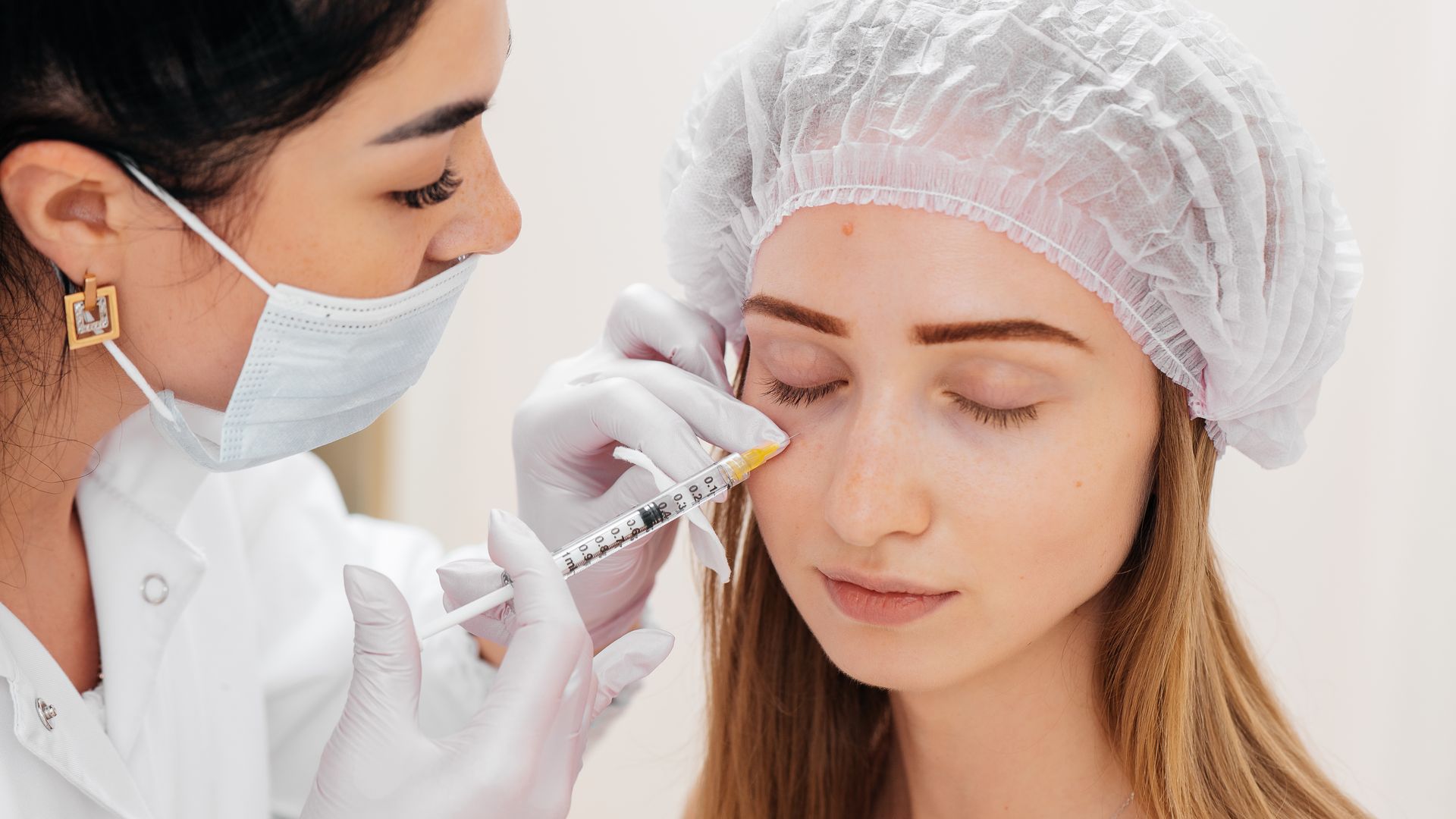
Tear trough fillers — hyaluronic acid injected precisely into the under-eye area — are among the most frequently performed treatments for this concern. They restore lost volume, reduce the shadow cast by a hollow tear trough, and smooth the transition between the lower eyelid and the cheek. Results are visible immediately; the effect typically lasts between 9 and 18 months, depending on the individual and the product used.
Polynucleotides (Rejuran) work differently. Rather than replacing volume, they stimulate the skin's own biological renewal — improving texture, hydration, and elasticity in the delicate skin under the eyes. They are particularly suited to cases where the main problem is thin, fragile, or crepey skin rather than a volumetric deficit.
In some cases, a combination of both approaches yields the best outcome.
When Is Surgery the Right Answer?
Not every case can be resolved without surgery. When there is significant excess skin, pronounced drooping of the lower eyelid, or herniated fat pads creating persistent puffiness ("bags"), a surgical solution may be the most appropriate path.
Blepharoplasty (eyelid surgery) removes excess skin and, where needed, repositions or removes herniated fat to restore a natural, rested appearance to the eye area. It is a surgical procedure — patients should expect a recovery period of several weeks, with swelling and bruising that gradually resolves. It is not a first-line option, and is recommended only when non-surgical approaches have been assessed and found insufficient.
The decision to proceed with surgery is never made lightly. A thorough consultation with the surgeon, including a detailed discussion of expectations and realistic outcomes, is an essential part of the process.
How Do We Determine the Right Solution for You?
Under-eye concerns sit at the intersection of aesthetic medicine and surgery — and the approach is highly individualised. There is no standard protocol that applies to every person who walks through the door.
At Klinika Višnjar, every patient begins with a thorough clinical consultation. The physician assesses:
- The type and underlying cause of the concern (volume loss, pigmentation, skin laxity, or a combination)
- Overall skin condition and facial ageing patterns
- Any previous treatments in the area
- The patient's expectations and recovery availability
From that assessment, an individualised plan is developed — one treatment or a considered combination — grounded in clinical reasoning and honest about what can be realistically achieved.
Where to Begin?
If under-eye bags or dark circles have been bothering you for some time and skincare alone has not delivered the results you hoped for, a consultation is the natural first step.
At Klinika Višnjar, we listen carefully, assess each case individually, and give you an honest picture of what is possible — without pressure and without overpromising. Book a consultation and let us find the right approach for you.
They can result from genetic predisposition, volume loss, pigmentation, skin laxity, fatigue or allergies. The underlying cause determines which treatment will actually help.
Creams and concealers can soften dehydration lines and refresh tired-looking eyes, but they cannot change the anatomy behind volume loss, skin laxity or deep pigmentation.
Results are visible immediately, and the effect typically lasts between 9 and 18 months, depending on the individual and the product used.
Surgery is considered when there is significant excess skin, drooping of the lower eyelid, or herniated fat pads that non-surgical treatments cannot adequately address.