
PRP – regenerative rejuvenation with your own blood plasma
5.10.2026
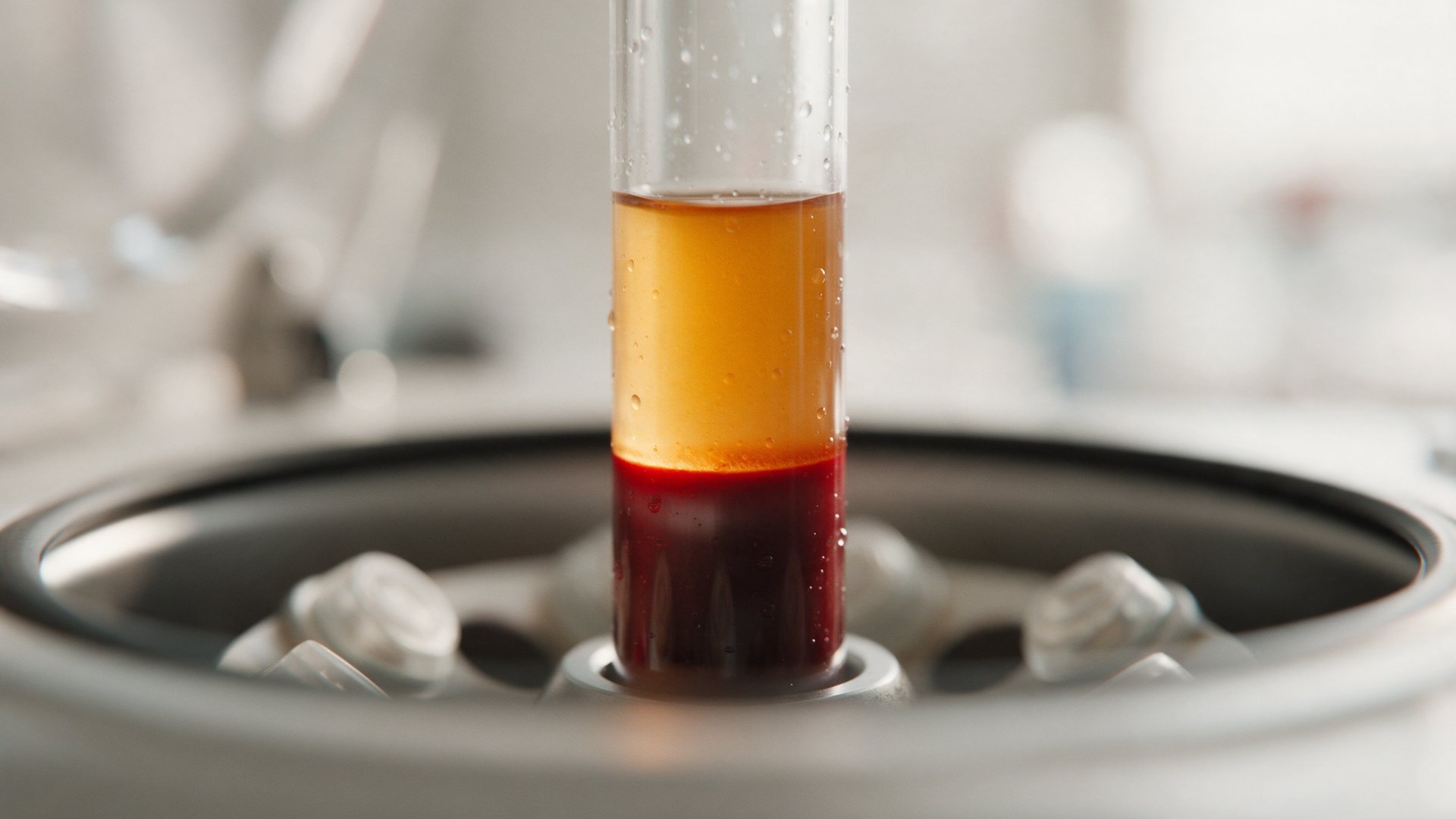
PRP, or platelet-rich plasma, is a regenerative treatment that uses components of the patient's own blood.
This makes PRP particularly interesting for people who want to improve skin quality or stimulate skin renewal in a more natural way – without adding traditional fillers or other foreign substances.
A small amount of blood is processed by centrifugation to obtain plasma with a higher concentration of platelets, which contain numerous growth factors and signalling molecules. These are involved in the body's natural processes of healing, tissue repair and collagen production.
PRP can be used for rejuvenation of the face, neck, décolletage and hands, for the treatment of hair loss, and as an adjunct to microneedling, laser treatments and scar treatment.
Why is PRP often referred to as "natural rejuvenation"?
The main characteristic of PRP is that the treatment does not rely on a synthetic filler or another pre-prepared active ingredient. The basis of the treatment is the patient's own blood.
From it, we prepare a concentrated plasma fraction rich in platelets, which is then injected into the area where we want to stimulate regenerative processes. PRP therefore does not work by directly filling the face or changing facial features. Its main purpose is to support the skin's own renewal processes. For patients who want a fresher and more rested appearance without adding volume, PRP can therefore be a very attractive option.
What exactly is PRP?
Our blood consists of plasma, red and white blood cells, and platelets. Platelets are best known for their role in blood clotting, but they also play an important role in tissue regeneration. They contain various growth factors and other biologically active molecules involved in:
- tissue repair,
- collagen production,
- fibroblast activity,
- formation of new blood vessels,
- healing,
- regenerative processes in the skin and scalp.
By centrifuging the patient's blood, we can prepare plasma with a higher concentration of platelets and then use it to treat the selected area.
How is PRP prepared and how does the treatment work?
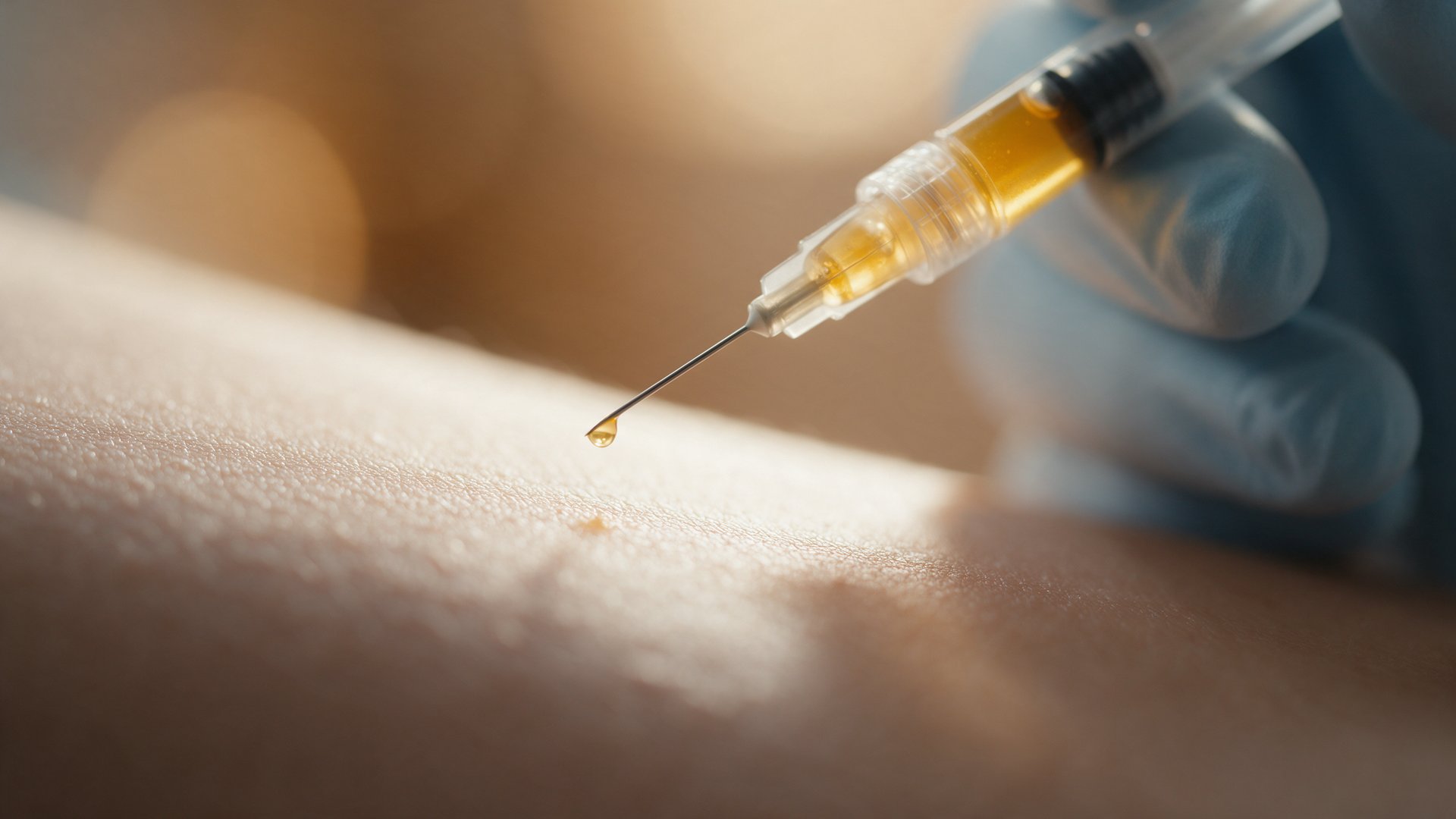
The treatment begins with the collection of approximately 20 ml of venous blood, or two tubes. The blood is then centrifuged to separate the individual blood components and prepare approximately 10 ml of PRP. Before application, an anaesthetic cream is applied to the skin to improve comfort during the treatment. The prepared PRP is then injected by the doctor with a fine needle into the selected area of the skin or scalp, depending on the indication and the chosen technique. The entire treatment usually takes approximately 30 minutes. After the procedure, mild redness, slight swelling, tenderness or small bruises may occur and usually resolve quickly.
How does PRP work?
After injection, platelets become activated and release growth factors and other signalling molecules. These are involved in processes associated with skin regeneration, collagen production and tissue repair. PRP therefore does not provide an immediate volumising effect like hyaluronic acid fillers. The result develops gradually because the aim is to stimulate the skin's own biological processes. This is also why the changes are usually subtle and natural – the goal is not to alter facial features, but to improve skin quality.
PRP for skin rejuvenation
PRP can be used on:
- the face,
- the eye area,
- the neck,
- the décolletage,
- the backs of the hands.
It is particularly suitable for patients who notice reduced skin quality, fine lines, loss of firmness or a somewhat tired appearance. The aim of the treatment is to stimulate regenerative processes and gradually improve:
- skin texture,
- elasticity,
- firmness,
- the appearance of fine lines,
- overall skin quality and freshness.
PRP can therefore also be an interesting option for younger patients who mainly want to maintain skin quality without changing facial features or adding volume.
PRP for the eye area
The skin around the eyes is among the thinnest on the face and often shows signs of tiredness and ageing at an early stage. PRP can be used to improve skin quality in the periorbital area, particularly when the aim is to improve texture, elasticity and fine lines. Because PRP does not act like a traditional filler, it can be a good option for patients who do not want additional volume under the eyes.
However, not all under-eye concerns are the same. If they are caused by a pronounced anatomical hollow, fat pads or excess skin, other treatments or blepharoplasty may be more appropriate.
PRP for hair
One of the most established uses of PRP is the treatment of hair thinning and androgenetic alopecia. PRP is injected into the scalp using multiple small injections, particularly in areas where hair follicles are still present but have become weakened or miniaturised. The goal is to support their function and the environment in which hair grows.
The best results can be expected in areas where hair follicles are still present. PRP cannot recreate a hair follicle in an area where it no longer exists. In cases of marked or sudden hair loss, it is therefore important to determine the underlying cause before beginning treatment.
PRP for scars
PRP can also be used as an adjunctive treatment for scars, particularly acne scars.
It is often combined with:
- microneedling,
- fractional CO₂ laser treatment.
In such combinations, microneedling or laser treatment initiates a controlled skin remodelling process, while PRP provides additional biological support for regeneration. The type of treatment and number of sessions depend on the type and depth of the scars.
PRP in combination with microneedling or CO₂ laser
PRP integrates very well into combined regenerative treatment protocols. With microneedling, controlled microchannels are created in the skin to stimulate renewal, while PRP can be used as additional support for this process.
Similarly, PRP can also be used alongside certain laser treatments, especially when the goal is to improve skin quality or treat scars. Combination treatments are always tailored to the condition of the skin and the treatment goals.
PRP and aesthetic gynaecology
The regenerative properties of PRP are also used in the field of aesthetic and regenerative gynaecology. The application techniques and indications vary considerably, so an individual medical consultation is required before treatment.
How many treatments are needed?
The basic PRP treatment protocol usually includes 3 treatments approximately one month apart. This initial cycle allows regenerative processes in the skin or scalp to be stimulated gradually and repeatedly. After completing the initial protocol, we recommend maintenance treatments approximately every 4–6 months, depending on the indication, the initial condition and the individual response to treatment.
The exact treatment plan is always adapted to the patient, but the most common approach is:
- 1st treatment,
- 2nd treatment after approximately 1 month,
- 3rd treatment after another approximately 1 month,
- followed by maintenance treatments every 4–6 months.
For treatment of the scalp, skin or scars, the protocol may be adjusted depending on the clinical situation.
When can results be expected?
PRP does not provide an immediate result like a filler. Because it works through the body's own regenerative processes, changes develop gradually. With skin treatments, patients may gradually notice improvements in texture, firmness and freshness, while hair treatment results are assessed over several months because of the natural hair growth cycle. For many patients, this gradual effect is also one of the advantages of the treatment – the change is subtle and natural.
PRP, fillers or biostimulators?
Each of these treatments has a different purpose. Hyaluronic acid fillers are primarily used to restore volume and shape facial structures. Biostimulators stimulate specific regenerative processes but contain prepared substances that are injected into the tissue.
PRP is prepared from the patient's own blood. It can therefore be particularly appealing to patients who want rejuvenation and improved skin quality using their own biological components. For some patients, PRP is sufficient as a standalone treatment, while for others it can be incorporated into a broader treatment plan together with laser therapy, microneedling, biostimulators or other procedures.
Rejuvenation using your own regenerative potential
PRP is one of the most interesting methods in regenerative aesthetic medicine precisely because it uses the patient's own blood as the basis of treatment. From approximately 20 ml of blood, we can prepare around 10 ml of platelet-rich plasma, which is then used where we want to support renewal and improve tissue quality. For patients looking for a subtle, gradual and as natural as possible approach to rejuvenation, PRP can therefore be an excellent standalone treatment or an adjunct to other aesthetic procedures.
At Klinika Višnjar, we first assess the condition of the skin, scalp or other treatment area and then select the most appropriate treatment protocol according to your wishes and individual needs.
PRP is a regenerative treatment in which the patient's own blood is centrifuged to obtain platelet-rich plasma, which is then injected into the skin or scalp to stimulate the body's natural healing, tissue repair and collagen production processes.
The basic protocol usually includes 3 treatments about one month apart, followed by maintenance treatments approximately every 4–6 months, depending on the indication and individual response to treatment.
The entire treatment takes approximately 30 minutes. Mild redness, slight swelling, tenderness or small bruises may occur afterwards and usually resolve quickly.
Hyaluronic acid fillers restore volume and shape facial structures, biostimulators contain pre-prepared active substances that stimulate regeneration, while PRP is prepared solely from the patient's own blood, without adding any foreign substances.