
Medical Microneedling for the Face: Results, Recovery and Treatment Process
22.7.2026

Are enlarged pores, fine lines, uneven skin texture or acne scars affecting the appearance of your skin? Medical microneedling is a minimally invasive procedure designed to stimulate the skin's natural renewal processes.
By creating controlled micro-injuries, the treatment activates the production of new collagen and elastin. As a result, skin quality improves gradually and naturally. After a series of treatments, the skin may appear smoother, firmer and more radiant, while pores, fine lines and certain types of scars may become less noticeable.
How does medical microneedling work?
During the procedure, a professional device equipped with very fine needles creates numerous microscopic channels in the skin. These controlled micro-injuries signal the skin to begin its natural repair process.
As the skin heals, the production of collagen and elastin increases. These proteins are essential for skin firmness, elasticity and a smooth texture. Results therefore do not appear overnight, but develop gradually over the weeks following treatment.
Needle depth is adjustable and is selected according to:
- the treatment area,
- skin thickness and sensitivity,
- the type of skin concern,
- the desired treatment outcome,
- previous procedures and the skin's response.
Shallower settings are used to improve skin texture and radiance, while certain types of atrophic scars may require a more intensive treatment.
Medical microneedling is not the same as a home dermaroller
Medical microneedling differs from the use of dermarollers and similar home-use devices.
A professional treatment involves a medical-grade device, a sterile single-use cartridge and individually adjusted needle depth. Proper skin preparation, aseptic conditions and the use of suitable products during the procedure are equally important.
Medical microneedling should also not be confused with radiofrequency microneedling. In radiofrequency microneedling, the needles deliver radiofrequency energy into the deeper layers of the skin in addition to providing mechanical stimulation.
What concerns can microneedling improve?
Medical microneedling may help improve the appearance of:
- fine lines and early wrinkles,
- enlarged pores,
- uneven skin texture,
- dull or tired-looking skin,
- mild loss of skin tone,
- uneven complexion,
- superficial pigmentation irregularities,
- atrophic acne scars,
- other shallow atrophic scars.
For scars, microneedling is generally most suitable for shallower atrophic scars, including certain rolling and boxcar scars.
Deep ice-pick scars usually respond less effectively and may require a combination of other treatments, such as TCA CROSS, subcision, chemical peels or laser procedures.
For deep structural wrinkles or significant skin laxity, microneedling alone is often not sufficient. Other treatments, such as dermal fillers, biostimulators, energy-based devices or a surgical facelift, may be more appropriate.
How is microneedling performed?
Each treatment begins with an assessment of the skin. Based on the condition of the skin, the patient's goals and any previous procedures, we create an individual treatment protocol.
Before the procedure, the skin is thoroughly cleansed and all make-up, creams and other products are removed. A topical anaesthetic cream may then be applied to make the treatment as comfortable as possible.
Once the anaesthetic has taken effect, the skin is cleansed and disinfected again.
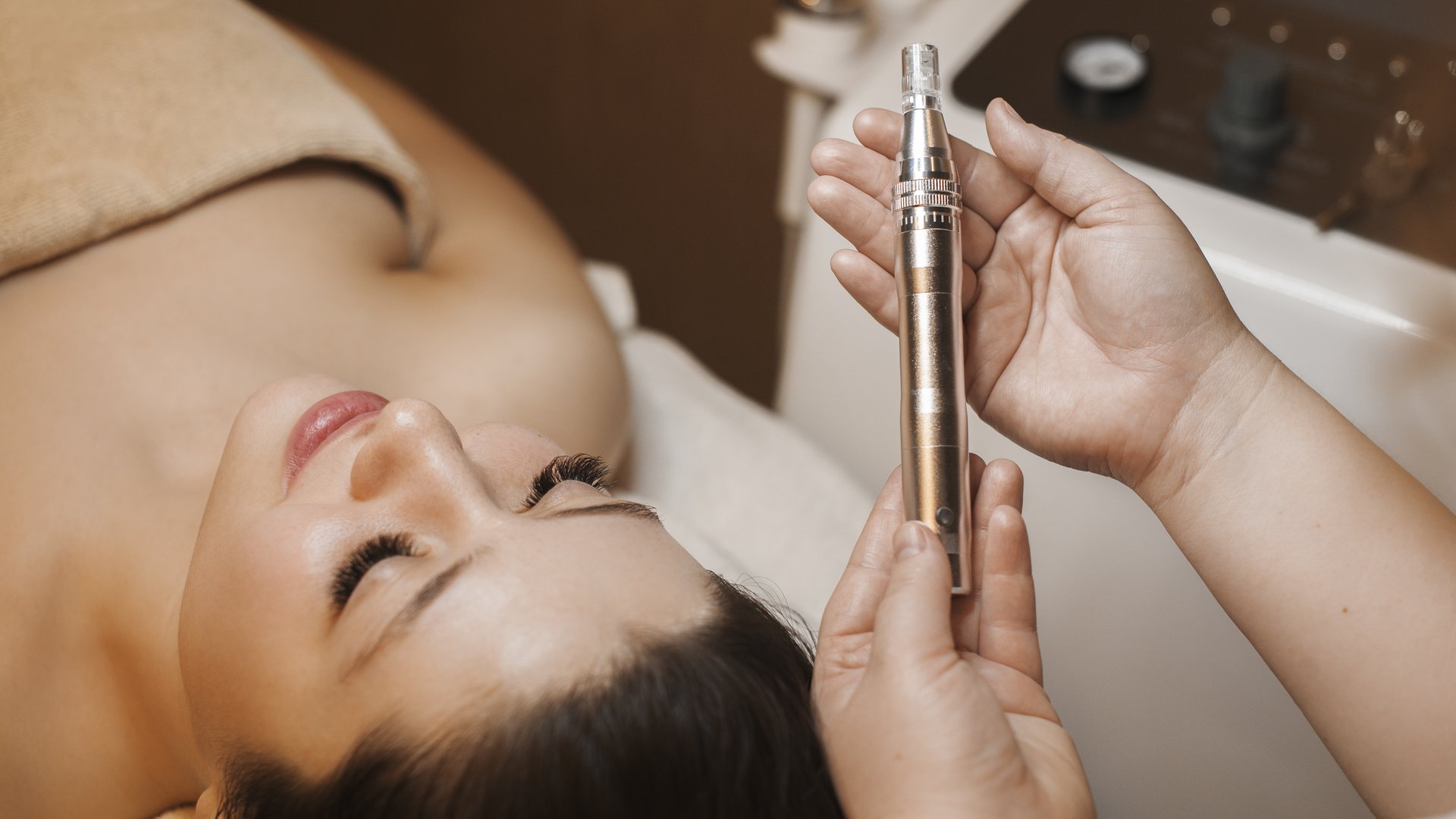
At Klinika Višnjar, medical microneedling is performed using the Dermapen 4 device. The device is passed evenly over the treatment areas, while the depth and intensity are adjusted according to the area and treatment objective.
During the procedure, we use only products that are suitable for the selected microneedling protocol in terms of composition, sterility and intended use.
After treatment, a soothing or cooling mask may be applied.
The entire appointment usually takes approximately 45 to 60 minutes.
Is microneedling painful?
A topical anaesthetic is usually applied before the procedure. Most patients mainly experience pressure, vibration, mild stinging or a scratching sensation.
Sensitivity varies between different areas of the face. The forehead, nose and upper lip may be slightly more sensitive than the cheeks.
What does the skin look like after treatment?
Immediately after treatment, the skin is usually red, warm, tight and slightly sensitive. Its appearance may resemble a moderate sunburn.
The intensity of the reaction depends on the depth and extent of the treatment. In most patients, the more noticeable redness subsides within one to three days.
Temporary side effects may include:
- mild swelling,
- skin tightness,
- tenderness,
- dryness,
- mild peeling,
- itching,
- small bruises,
- pinpoint crusting in more intensively treated areas.
After a lighter treatment, most patients can return to their usual activities the following day. Recovery may take slightly longer after a more intensive scar treatment.
Skincare after microneedling
After treatment, the skin barrier is temporarily more sensitive, so appropriate aftercare is important.
We recommend:
- avoiding unnecessary touching of the skin on the first day,
- using gentle cleansing and moisturising products,
- following the instructions provided regarding make-up,
- avoiding retinoids, acids, exfoliants and irritating active ingredients for several days,
- avoiding saunas, swimming pools, intense exercise and heavy sweating for 24 to 48 hours,
- avoiding direct sun exposure,
- regularly applying broad-spectrum SPF 50,
- avoiding rubbing the skin or removing any flakes or crusts.
Direct sun exposure should be avoided for at least five to seven days, or longer if the skin remains irritated.
When can I wear make-up again?
The appropriate time to reapply make-up depends on the intensity of the treatment and the skin's reaction.
As a general rule, we recommend waiting at least until the following day or until the skin has settled. Clean brushes and sponges should be used, along with products that will not further irritate the skin.
Always follow the individual instructions provided by your practitioner.
How many treatments are needed?
The number of treatments required depends on the initial condition of the skin and the treatment goal.
For general improvement in skin quality, we usually recommend a course of three to four treatments.
For more pronounced acne scars, four to six or more sessions may be required. Treatments are usually performed approximately four to six weeks apart to allow sufficient time for skin regeneration and collagen production.
One or two maintenance treatments per year may be recommended to help preserve the results.
When will results become visible?
After the first treatment, you may notice a fresher appearance, improved radiance and temporarily smoother skin texture.
More significant results develop gradually, as collagen production and remodelling take several weeks.
An approximate timeline:
- after the first treatment: fresher appearance and improved radiance,
- after the second or third treatment: gradual improvement in texture and skin tone,
- four to twelve weeks after completing the course: a more developed collagen-remodelling effect.
The skin may appear smoother and firmer, while pores, fine lines and atrophic scars may become less noticeable.
Results vary between patients and cannot be guaranteed in advance. Factors such as age, skin condition, lifestyle, sun protection, smoking, home skincare and the skin's ability to heal all play an important role.
Can microneedling completely remove scars?
No. The aim of treatment is to reduce the visibility of scars and improve skin texture.
Complete removal of scars cannot generally be guaranteed. For some types of scars, the best results are achieved by combining several different procedures.
A proper assessment of the type and depth of the scars is therefore important before treatment begins.
Medical microneedling combined with other treatments
In appropriately selected patients, medical microneedling may be complemented by other procedures.
PRP, or platelet-rich plasma
PRP may be used as an adjunct to microneedling in selected patients. Plasma contains platelets and growth factors involved in healing and tissue regeneration.
The outcome also depends on the method of blood collection and PRP preparation, sample quality and the individual characteristics of the patient.
Sterile professional products
Selected sterile products intended for professional use may be applied during microneedling, depending on the indication.
Not every cosmetic serum is suitable for application to skin with a temporarily disrupted barrier. Product selection should therefore always be made by a properly trained practitioner.
CO₂Lift Pro carboxytherapy
At the practitioner's discretion, CO₂Lift Pro carboxytherapy may also be included in the treatment protocol as an adjunctive treatment to soothe the skin and support recovery after aesthetic procedures.
Chemical peels
For certain skin concerns, microneedling may also be combined with an appropriately selected chemical peel. This combination may be used to improve texture, pigmentation irregularities and overall skin radiance.
Not all treatments are necessarily performed on the same day. The order and timing of procedures are always planned individually.
Botulinum toxin or dermal fillers are generally not administered in the same area on the same day as microneedling, unless the physician determines otherwise and establishes an appropriate protocol.
When is microneedling not suitable?
Microneedling is generally not performed in the presence of:
- active inflammatory acne,
- bacterial, viral or fungal skin infection,
- active herpes,
- open wounds,
- severely irritated or damaged skin,
- active eczema or psoriasis in the treatment area,
- a pronounced tendency to develop keloid scars,
- significant blood-clotting disorders,
- certain diseases or conditions that impair wound healing,
- significant immune suppression,
- pregnancy or breastfeeding, depending on the clinic's protocol and the physician's assessment.
Before treatment, it is important to inform the practitioner about any medication you are taking, a history of herpes, previous isotretinoin treatment, diabetes, clotting disorders and previous aesthetic procedures.
Blood-thinning medication must not be discontinued without medical advice. Any adjustment to such treatment may only be made by the physician who prescribed it.
Is microneedling suitable during summer?
Microneedling can also be performed during the warmer months, but only with strict sun protection.
It is advisable to postpone treatment if you are planning:
- a seaside holiday,
- intense sun exposure,
- a visit to a tanning salon,
- outdoor activities without adequate sun protection,
- travel to a very sunny destination.
Microneedling is generally not performed on freshly tanned or sunburned skin.
How long do the results last?
The production of new collagen may provide a long-lasting improvement in skin quality, but the natural ageing process continues.
Results can be supported by:
- regular use of SPF 50,
- appropriate home skincare,
- active ingredients selected for your skin,
- a healthy lifestyle,
- occasional maintenance treatments,
- combination with other medical aesthetic procedures.
Where should I start?
If you are considering medical microneedling in Ljubljana, the first step is a professional skin assessment.
At Klinika Višnjar, we assess the condition of your skin, listen to your goals and prepare an individual treatment plan. Depending on your needs, we may recommend microneedling as a standalone treatment or in combination with other procedures.
Our goal is not to offer the same treatment to every patient, but to select the procedure that is most appropriate for your skin condition, expectations and available recovery time.
Book a consultation and let us create a personalised plan for healthier, smoother and more radiant skin.
A topical anaesthetic is usually applied beforehand, so most patients mainly feel pressure, vibration or mild stinging.
A course of three to four treatments is generally recommended for overall skin improvement, or four to six or more for more pronounced acne scars, spaced four to six weeks apart.
In most patients, noticeable redness subsides within one to three days, and after a lighter treatment most people resume normal activities the next day.
It is generally avoided with active inflammatory acne, skin infections, active herpes, open wounds, pregnancy, breastfeeding, and certain other medical conditions.