
Lip Fillers: Enhancement, Shaping and Natural-Looking Results
24.7.2026

Would you like slightly fuller lips, a more defined border or an improvement in minor asymmetry? Hyaluronic acid fillers allow us to adapt lip volume and shape to the patient's facial anatomy and individual preferences.
The treatment is not intended only to increase volume. It can also be used to gently shape the lips, define the Cupid's bow, improve the balance between the upper and lower lip or restore volume that has gradually decreased with age.
At Klinika Višnjar, our goal is a natural and balanced result. The amount of filler, the product and the technique are always tailored to the individual.
What can lip filler achieve?
Hyaluronic acid filler can be used to:
- increase lip volume,
- define the lip border and Cupid's bow,
- improve shape and projection,
- reduce the appearance of mild asymmetry,
- restore age-related volume loss,
- create a fresher and more defined appearance.
For very thin lips or when a greater change is desired, it is often more appropriate to build the result gradually over several appointments.
Who is a suitable candidate?
Lip fillers may be suitable for adults with realistic expectations who would like a subtle or moderate change.
Treatment is generally postponed in the presence of:
- active cold sores,
- infection or inflammation around the mouth,
- severely damaged or cracked lips,
- acute illness,
- pregnancy or breastfeeding,
- known hypersensitivity to the product's ingredients.
Before treatment, tell your physician if you have previously had cold sores, take blood-thinning medication, have an important chronic or autoimmune condition, or have previously received fillers or permanent materials in the lips.
Which filler do we choose?
For the lips, we most commonly use absorbable fillers based on hyaluronic acid.
Fillers differ in softness, elasticity, water-binding capacity and tissue support. Softer fillers may be suitable for a subtle result and natural movement, while firmer products may provide more pronounced definition or projection.
The firmest filler is not necessarily the best choice. The selection depends on anatomy, tissue thickness, previous treatments and the desired result.
How much filler do I need?
The appropriate amount cannot be determined from a photograph alone or simply from a request for a "natural result".
It depends on:
- the initial size and shape of the lips,
- the desired increase,
- tissue quality,
- any remaining previous filler,
- the selected product and technique.
More filler does not necessarily produce a better result. Excessive amounts may cause over-projection, reduced definition, migration or an unnatural appearance.
How is the treatment performed?
The treatment begins with a consultation and an assessment of the lips at rest and during speech or smiling.
The skin is cleansed and disinfected, after which a topical anaesthetic cream may be applied. Many fillers also contain lidocaine, which helps reduce discomfort during injection.
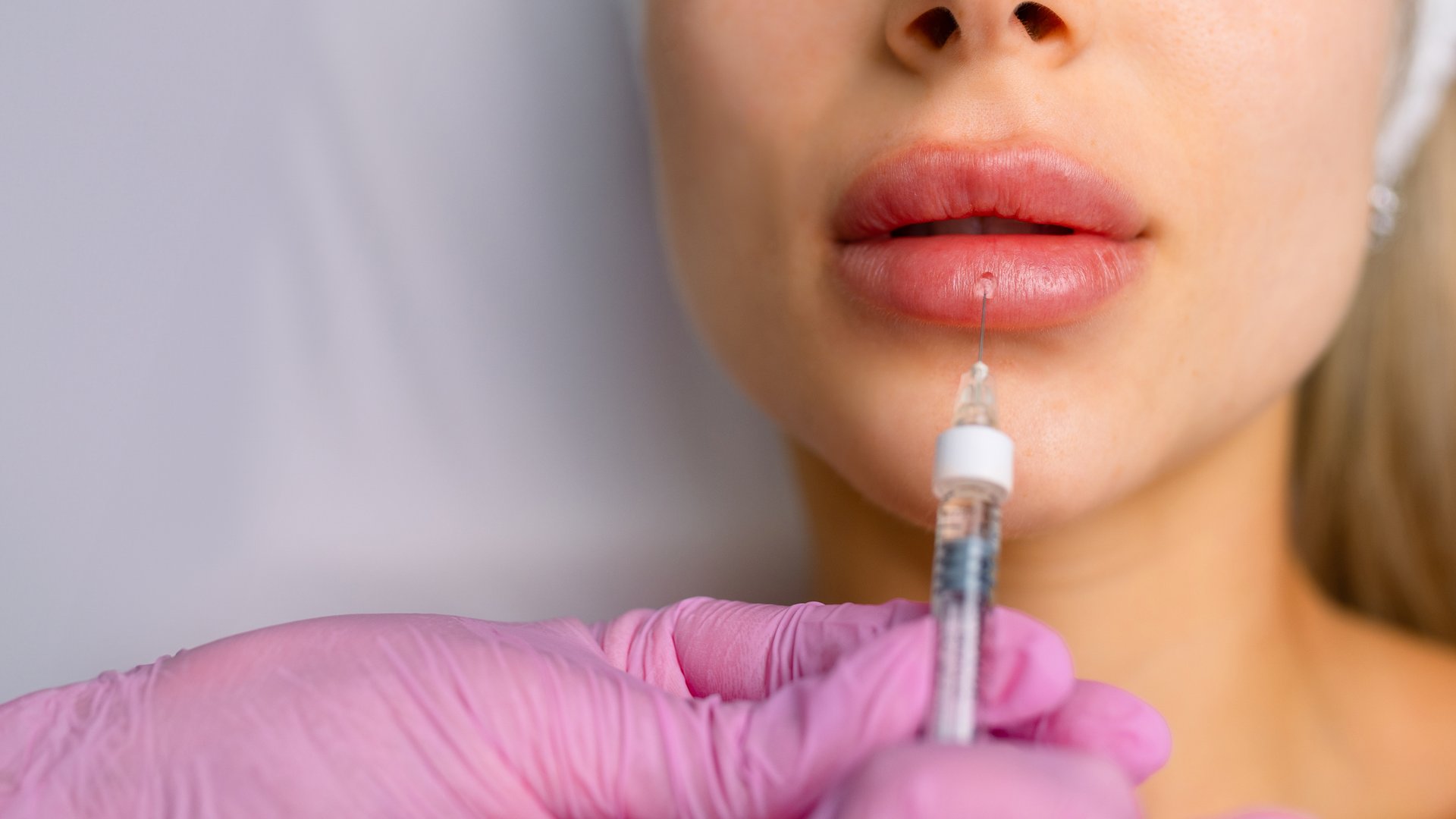
The filler is injected using a fine needle or cannula. The procedure itself usually takes approximately 20 to 30 minutes.
The lips are a sensitive area, so the treatment is not completely painless. However, most patients mainly experience brief needle pricks, pressure or a mild burning sensation.
What can I expect after treatment?
Common temporary reactions include:
- swelling,
- tenderness,
- redness,
- minor bruising,
- temporary asymmetry,
- a feeling of tightness.
Immediately after treatment, the lips often appear larger than they will after healing. Swelling may be most pronounced the following day and then gradually decrease.
The final result is usually assessed after approximately 10 to 14 days.
Aftercare following lip filler
After treatment, we generally recommend:
- not massaging the lips unless instructed by the physician,
- avoiding intense exercise on the first day,
- avoiding saunas and excessive heat for 24 to 48 hours,
- limiting alcohol,
- avoiding pressure on the lips,
- waiting with make-up until the injection sites have settled,
- applying cold compresses gently if needed.
Most patients can return to normal activities immediately, although swelling and bruising may remain visible for several days. The treatment should therefore be scheduled well in advance of an important event.
What result can I expect?
Once the swelling has settled, the lips may appear:
- slightly fuller,
- more defined,
- more symmetrical,
- better balanced with the rest of the face.
A good result is not necessarily one that makes it obvious that a treatment has been performed.
Perfect symmetry cannot be guaranteed, as minor differences between the left and right sides of the face are normal. Filler can reduce asymmetry but may not completely eliminate it.
How long do the results last?
Results usually remain visible for approximately six to twelve months, although they may last for a shorter or longer period in some patients.
Duration depends on:
- the product used,
- the amount and injection area,
- lip movement,
- individual metabolism,
- previous treatments.
The filler breaks down gradually, so the result does not disappear suddenly.
Can the filler be dissolved?
Hyaluronic acid filler can be broken down using an enzyme called hyaluronidase.
It may be used in cases of unsuitable filler placement, migration, certain lumps or urgently when vascular occlusion is suspected.
Dissolving is not always completely predictable and more than one treatment may be required. For this reason, describing the procedure as "fully reversible" is not entirely accurate.
What are the risks?
The most common side effects are swelling, bruising, tenderness and temporary asymmetry.
Other possible complications include:
- infection,
- reactivation of cold sores,
- lumps or nodules,
- filler migration,
- delayed inflammatory reaction,
- prolonged swelling.
The most serious, although rare, complication is vascular occlusion. This may occur if filler enters a blood vessel or compromises blood supply to the tissue.
Contact the clinic immediately if you experience:
- severe or increasing pain,
- pale, greyish or mottled skin,
- a cold area of the lip,
- blisters or wounds,
- rapidly increasing swelling,
- signs of infection,
- any change in vision.
Visual changes or neurological symptoms require immediate emergency medical attention.
Why does the choice of practitioner matter?
The lips have a rich and anatomically variable blood supply. The procedure therefore requires detailed anatomical knowledge, correct technique and the ability to recognise and treat complications promptly.
Important factors include:
- a medical assessment before treatment,
- selection of the appropriate filler,
- aseptic technique,
- a conservative and individual approach,
- availability of the practitioner after treatment,
- an established protocol for urgent complications.
An individual approach at Klinika Višnjar
At Klinika Višnjar, we assess the lips in the context of the entire face. Before treatment, we discuss whether you would like a subtle refresh, more defined shape, improvement in asymmetry or additional volume.
Our aim is not to follow a single lip shape or a temporary trend, but to create a result that complements your face and remains natural during speech and smiling.
Book a consultation at Klinika Višnjar in Ljubljana. Together, we will assess your lips and create a safe, individually tailored treatment plan.
The lips are a sensitive area, so treatment isn't completely painless, but most patients mainly experience brief needle pricks, pressure or a mild burning sensation.
Results usually remain visible for approximately six to twelve months, depending on the product used, the amount injected and individual metabolism.
Swelling may be most pronounced the following day and then gradually decreases. The final result is usually assessed after approximately 10 to 14 days.
Yes, hyaluronic acid filler can be broken down using an enzyme called hyaluronidase, although dissolving is not always completely predictable.