Abdominal contouring - Tummy Tuck (abdominoplasty): when it is indicated, how it is performed, and what outcomes to expect
29. 12. 2025

When should you consider abdominoplasty?
Signs that exercise alone will no longer resolve the abdominal concerns
Abdominoplasty is not an “instant” weight-loss intervention. It is a body-contouring procedure that can be appropriate when you have already addressed the main drivers (pregnancy, significant weight loss, regular physical activity, improved nutrition), yet the abdomen still does not improve as expected due to excess skin, soft-tissue laxity, and/or abdominal wall changes.
The most common signs that you may be a candidate for abdominal contouring include:
- You have a lower abdominal skin “pannus” that overhangs the waistband.
- Even at a normal body weight, you feel the abdomen projects anteriorly.
- When sitting or bending forward, pronounced skin and adipose folds form.
- After pregnancy, the abdomen has not returned to its previous contour.
- You notice separation of the abdominal wall musculature (rectus diastasis) and a central abdominal bulge.
- Striae and excess skin below the umbilicus affect clothing fit and self-confidence.
- Clothing never fits well over the abdomen, even though you are satisfied with the rest of your figure.
- You avoid tight clothing and swimwear due to the abdomen.
- After substantial weight loss, the skin remains lax and does not “retract”.
- You feel the abdomen makes you appear older and visually heavier than you are.
If you identify with several of these points and the issue is not simply a small amount of excess weight but genuine redundant skin and soft-tissue laxity, abdominoplasty can be an appropriate option.
Why the abdomen may not return to its pre-pregnancy or pre-weight-loss state
After pregnancy and significant weight fluctuations, several anatomical and tissue-level changes can occur:
- the skin stretches and loses elasticity
- adipose tissue distribution changes
- the abdominal muscles may separate (rectus diastasis)
- the connective tissue (fascia) weakens
In such cases, abdominal exercises may improve strength, but often do not substantially improve the aesthetic contour. Excess skin does not “dry out” or retract if there is too much of it. With abdominoplasty, we excise redundant skin and subcutaneous fat and simultaneously tighten the abdominal wall to achieve a flatter, firmer abdomen.
How abdominal laxity can affect posture, the back, and self-confidence
Studies and clinical experience suggest that abdominal contouring can influence:
- posture (a tightened abdominal wall can provide better support for the spine)
- the subjective sense of core stability
- in some patients with diastasis, a reduction in lower back pain
- body image and how clothing fits and feels
Abdominoplasty is not a universal solution for all back or posture issues, but in combination with appropriate core strengthening it may contribute to a more stable, lighter feeling in the body.
What is abdominoplasty?
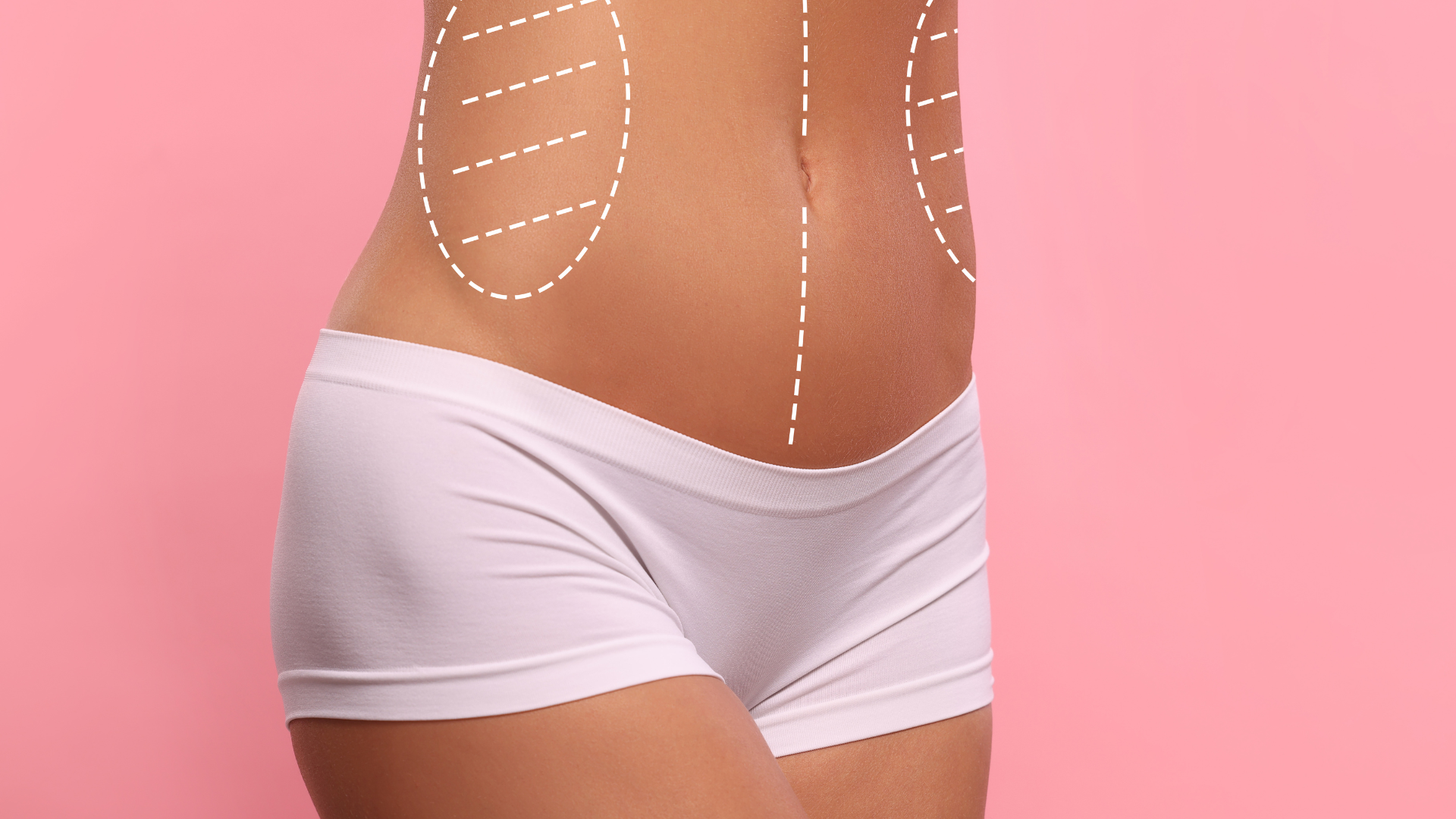
In a standard (full) abdominoplasty:
- we remove excess skin and adipose tissue from the lower abdomen (and, if needed, the mid-abdomen)
- we tighten and reinforce the abdominal wall when muscle separation (diastasis) is present
- we contour a flatter, firmer abdomen and a narrower waistline
- we often also improve the appearance of the external genital/mons pubis region, which can be displaced inferiorly by excess overhanging skin
The outcome is generally long-lasting, but it still depends on stable body weight and lifestyle. Significant weight fluctuations after surgery can compromise the result over time, so an active lifestyle is encouraged once recovery is complete.
Types of abdominoplasty: mini, full, and combined approaches
As with other surgical procedures, there is no single “one-size-fits-all” technique. The choice depends on the amount and location of redundant skin and fat, tissue elasticity, and the status of the abdominal wall musculature.
Mini abdominoplasty
Suitable when:
- excess skin is predominantly limited to the area below the umbilicus
- the abdominal muscles are not markedly separated
- the upper abdomen is not significantly protruding
Incision: typically shorter and placed low, concealed within the underwear/bikini line. The umbilicus is usually preserved; in some cases it may be repositioned slightly lower without additional skin incisions or visible scarring.
Full (classic) abdominoplasty
Suitable when:
- excess skin is also present above the umbilicus
- there is a larger volume of adipose tissue and skin laxity
- rectus diastasis is present
In a full abdominoplasty, the abdominal skin and subcutaneous tissue are elevated superiorly up to the costal margin. The abdominal wall is tightened using a dedicated technique, excess skin is removed, and the remaining tissue is secured and reinforced with specialised sutures. Frequently, a portion of skin up to the umbilical level is removed, and a new umbilical opening is created in a position that aligns with the newly contoured abdomen.
Combination with VASER liposuction and Renuvion
At Klinika Višnjar, abdominoplasty is often combined with:
- VASER liposuction, which selectively reduces adipose tissue, particularly in the lumbar/flank region, and supports contouring of the abdomen and waist
- Renuvion, which uses plasma technology to further tighten the skin in selected areas without additional incisions
In carefully selected patients, this approach can achieve a smoother transition between the abdomen, hips, and lumbar region.
Who is an appropriate candidate for abdominal contouring?
Abdominoplasty is most suitable for women who:
- are close to their target body weight
- have maintained a stable weight for at least several months
- are bothered by abdominal skin and fat that does not improve with exercise
- after pregnancy, notice a protruding abdomen due to muscle separation
- are generally healthy and do not have uncontrolled chronic disease
It may be advisable to postpone surgery if:
- you plan pregnancy in the near future
- you intend to lose a significant amount of additional weight
- you have uncontrolled chronic disease or a very high body mass index
- you smoke and are not prepared to stop at least a few weeks before and after surgery
At the consultation, we assess candidacy honestly and discuss whether the timing is appropriate or whether it is better to first optimise lifestyle, weight stability, health conditions, or family planning.
Where will the scars be after abdominoplasty?
Any surgical procedure results in scars, which are unavoidable. At Klinika Višnjar, incisions are planned to keep scars as concealed as possible:
- in the lower abdomen, low in the bikini line, typically covered by underwear and swimwear
- in a full abdominoplasty, also around the umbilicus on the inner aspect
Scar length depends on the amount of redundant skin to be removed. The greater the excision required, the longer the incision. Scars typically fade over time and become discreet in most patients. Scar appearance is also influenced by postoperative care, so it is important to follow instructions regarding wound care and scar protection.
How recovery typically progresses after abdominal contouring
Recovery depends on the type of abdominoplasty and individual factors, but it generally follows this pattern:
- first days: swelling and a sensation of tightness are expected; rest, prescribed medication, sleeping with the torso slightly elevated, and wearing a compression garment are recommended
- 7–10 days: most patients can manage light activities; some return to office work if it is not physically demanding
- 3–6 weeks: gradual return to most activities; heavier physical exertion and sport should wait until full recovery
- 3–6 months: swelling has resolved, scars soften, and the abdomen “settles” into its final contour
All patients receive detailed written instructions. We monitor recovery during follow-up visits and adjust recommendations when needed regarding activity, compression garment use, and scar care.
How long do results last, and what can you realistically expect?
The result of abdominoplasty is generally durable: the redundant skin and adipose tissue we remove typically do not return. However:
- significant weight fluctuations can re-stretch the skin over time, particularly above the scar
- a pregnancy after surgery can again separate muscles and stretch the abdomen
- ageing affects skin quality, including the abdomen
Realistic expectations after abdominoplasty include:
- a visibly flatter, firmer abdomen
- reduction or elimination of a lower abdominal skin “pannus”
- improved clothing fit
- a more proportionate silhouette through the waist and hips
Abdominoplasty does not create a “perfect” body, but it can make a meaningful difference in comfort, confidence, and how you feel in swimwear and everyday clothing.
Where to start if you are considering abdominal contouring
If you are considering abdominoplasty, the first step is an honest discussion, both with us and with yourself.
On our main procedure page you can review core information and book a consultation:
At the consultation, we assess together:
- the condition of your abdominal skin and soft tissues
- whether diastasis is present
- plans regarding lifestyle and weight maintenance
- your goals and expectations
We then create a realistic plan: whether a mini or full abdominoplasty is appropriate, whether it makes sense to combine it with VASER liposuction or Renuvion, and what recovery you can expect. The aim is not “photo perfection” but an abdomen you feel good with in real life.