Facelift in your 40s, 50s, and 60s: differences, expectations, and results
8.1.2026
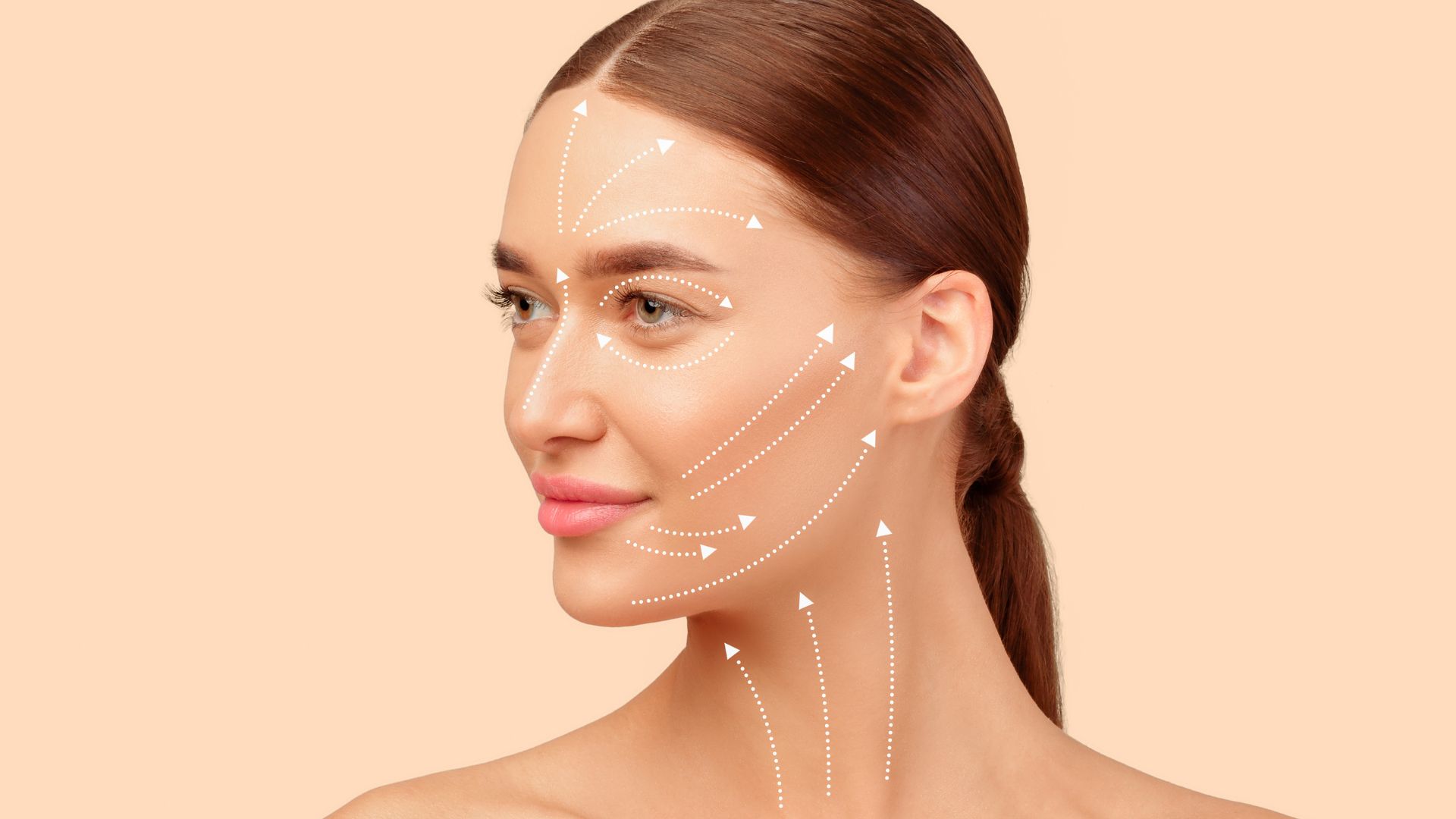
When we first seriously catch ourselves in the mirror and admit that a sagging face is bothering us, the same question usually appears: "Am I too young for a facelift?" or "Is it already too late for me now?"
The truth lies somewhere in between. A facelift (facial rejuvenation and lifting surgery) is not only the last option when all other non-surgical procedures have produced suboptimal results, and it is not reserved for just one age group. It is a procedure that we adapt to the stage of your life and to the way your face is ageing.
Studies show that a facelift visually rejuvenates the face by approximately 7 to 12 years on average.*
The procedure does not stop ageing, but it does turn it back for a few years and creates a new "starting point" from which the face continues to age in a more harmonious and attractive way.
At Klinika Višnjar, we never look at facelift surgery only through the number on your birth certificate. Below, we explain what is usually characteristic of a facelift in your 40s, 50s, and 60s, what patients typically expect, and what results you can realistically expect.
How does the face change over the decades?
The face does not "sag" all at once. The ageing process involves several complex factors at cellular and tissue level, which are mostly seen through the following features:
- the skin loses collagen and elastic fibres
- the fat pads deflate, become looser, and slide downwards
- the ligaments and muscles supporting the face weaken and diminish
- the bony structure changes slightly over the years
In your 40s, the changes are still subtle, and the first smaller facial lines appear.
In your 50s, we see changes in the lower face and neck. Wrinkles become somewhat more pronounced, and the skin of the chin and jawline becomes slightly sagging.
In your 60s, because of hormonal changes, sun exposure, lifestyle, and age, the skin becomes unevenly pigmented, thinner, and more wrinkled. The tissues are more sagging due to reduced elasticity and volume loss, and the lines are more pronounced.
A facelift, or facial lifting procedure, aims to rebalance all these elements. With specific techniques, we lift the tissues that have descended and create the appearance of turning back the clock by a few years, while still keeping your facial features recognisably yours.
Facelift in your 40s: early rejuvenation and a "reset"
In their 40s, many women still receive compliments that they "look great for their age", yet they see something different in the mirror: the first shadows under the eyes, a tired appearance, a softer jawline, slightly more "empty" cheeks.
What usually happens in your 40s
- initial sagging of the cheeks
- slightly softened jawline
- more visible nasolabial folds
- the feeling that make-up no longer "sits" as it used to
At this stage, the skin and tissues still respond very well. Elasticity is good, the muscles still provide solid support, and the changes are mainly related to volume loss, early descent, and fine surface lines.
What kind of facelift may be considered
In the 40s, we most often consider less extensive but highly effective approaches:
- a mini facelift or S-lift when there is early sagging of the lower face
- a targeted SMAS or deep-plane facelift when the changes are more pronounced
- a combination of facelift with blepharoplasty if the tired appearance mainly comes from the eye area
Our goal in the 40s is discreet but clear rejuvenation. A result where you look as though you have slept well, had a holiday, and have a little less stress. A few years younger, but still completely "you".
Expectations and results
- the result is usually very natural, because the skin follows the lifted tissues well
- visual rejuvenation of approximately 5 to 10 years can be expected, depending on the starting point and combination of procedures
- the effect lasts for years, after which ageing continues from that improved point
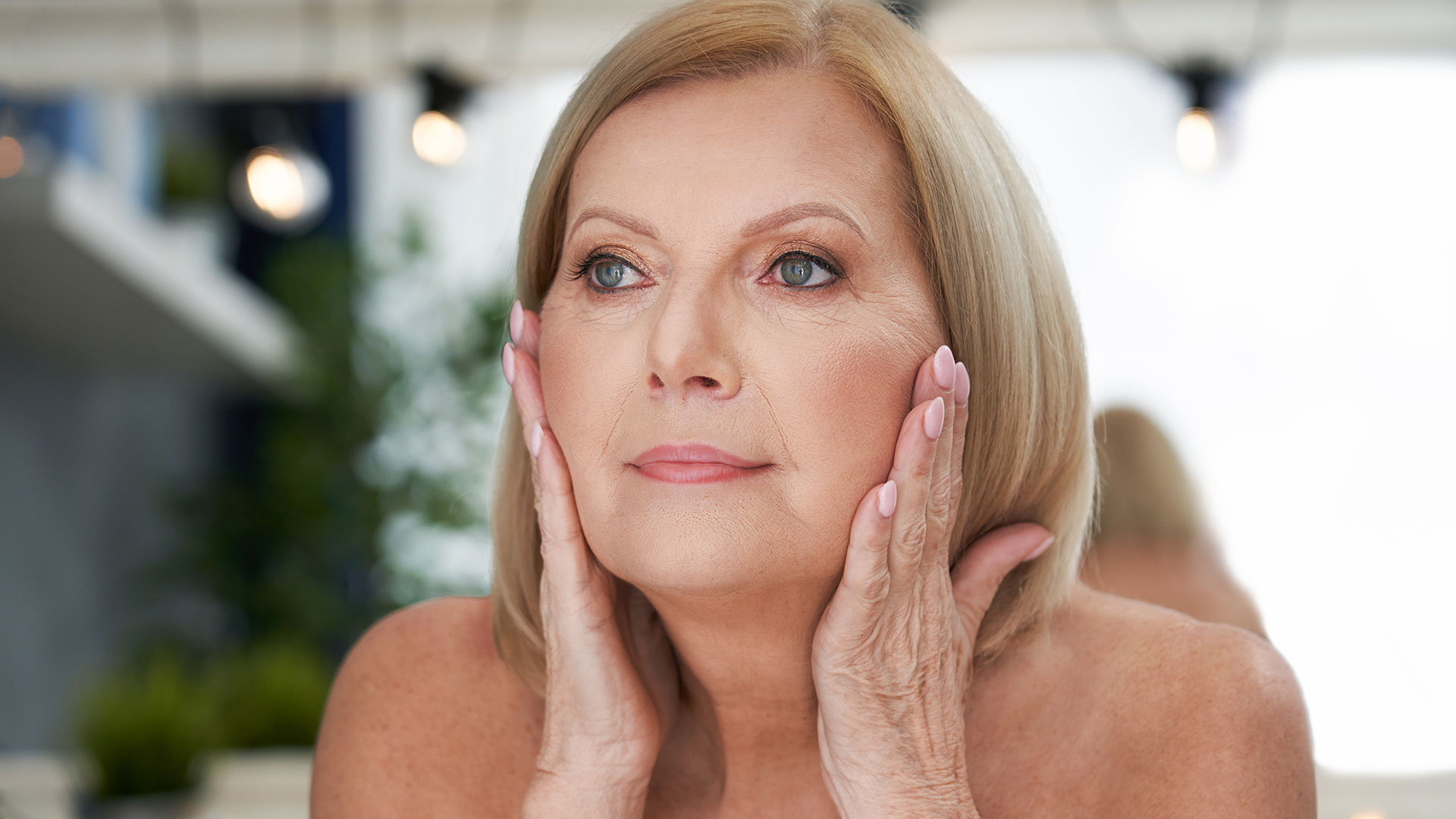
Facelift in your 50s: a clear lift and new facial definition
The 50s are very often the ideal time for a facelift. The signs of ageing are pronounced enough for the procedure to make a major difference, while the skin is still responsive enough to healing and tissue repositioning.
Typical changes in your 50s
- more pronounced sagging of the cheeks
- soft "jowls" along the jawline
- loose neck skin and submental fullness
- deepened nasolabial folds
- a combination of volume loss and excess skin
At this stage, many patients notice that fillers and non-invasive treatments can no longer restore the desired look. If everything were treated only by adding volume, the face would quickly become too full and unnatural. For such patients, we suggest:
- an SMAS facelift to lift the deeper structures
- a deep-plane facelift combined with a neck lift when there is neck laxity with wrinkled skin
- blepharoplasty if the eyelids additionally contribute to the tired look
- a brow lift if the brows and upper face are descended
- lipofilling, or another method of volume restoration, when the face has become too deflated
- facial rejuvenation with CO2 laser, to improve skin appearance
At this stage, we are talking about a clear lift and new definition of the face and neck. These are procedures in which we reposition and lift the deep tissues and fix them with specific techniques so they do not descend again. This is not a slight touch-up, but a serious "reset of time".
Expectations and results
- visual rejuvenation of approximately 7 to 12 years can be expected, especially if facelift is combined with other procedures
- the jawline becomes defined again, the neck tighter and more contoured
- the face looks firmer and more rested, and lines are less visible
- most patients report receiving comments such as, "You look incredibly well rested"
Even so, expectations must remain realistic. Even after the best facelift, you are still in your 50s, you just look as though you are wearing those years more lightly.
Facelift in your 60s: multi-layered rejuvenation for active years
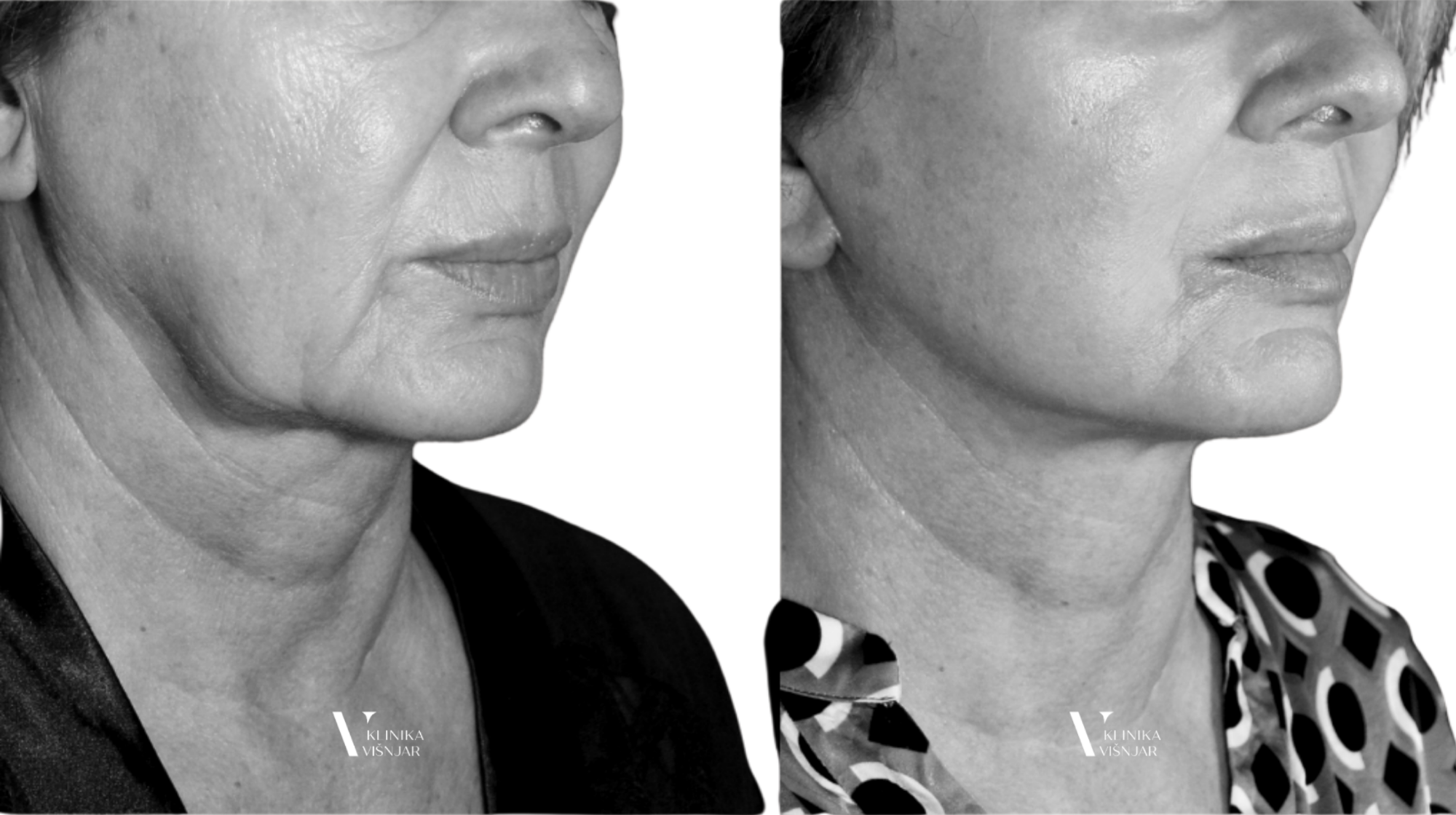
In their 60s, many patients wonder whether they are "too late" for a facelift. When we look at the data and the literature, we see that this is not true. In carefully selected patients in their 60s, a facelift can produce exceptionally beautiful results and visible rejuvenation, provided health status is good and expectations are realistic.
Typical changes in your 60s
- markedly sagging skin of the face and neck
- deep wrinkles and folds
- thinner, more delicate skin with uneven pigmentation and age-related changes
- a combination of volume loss, gravity, and surface changes that pull the facial skin and tissues downwards and create a "deflated" look
At this stage, the approach is even more individual. During consultation, we discuss the possible techniques and approaches in detail and always assess the entire face and neck.
In patients in their 60s, we often perform:
- a more extensive deep-plane facelift with neck lift
- correction of the upper and lower eyelids if they contribute strongly to the tired appearance
- lipofilling or other volume-restoring techniques in the appropriate areas
- a brow lift to elevate the upper face
- CO2 laser treatment or microneedling to improve skin tone and structure
It is important that the lift of the associated structures is done deeply and stably. In this way, we are not simply pulling the skin, but lifting and tightening the deep tissues, which makes the result more natural and long-lasting.
Expectations and results
- realistic rejuvenation of approximately 10 to 15 years can be expected, and in well-selected patients sometimes even more
- we do not erase every wrinkle, but we do improve the shape of the face and neck
- the goal is for the face and body to appear aligned again: an active, vital woman or man, with a face that reflects that vitality
Many patients who undergo facelift in their 60s say something similar: "I don't want to look like I'm 30. I want my face to finally match how I feel again."
What all decades have in common
Whether you are considering a facelift in your 40s, 50s, or 60s, some truths remain the same.
1. A facelift really does "erase years", but not life.
It can rejuvenate the appearance by approximately 7 to 15 years, but it does not stop ageing.
2. A natural result is always the first goal.
We do not want overly tight faces or overfilled cheeks. We want you to look like yourself, just in a more rested and firmer version.
3. Your age is not the only criterion.
The decision is made together during consultation, based on tissue condition, skin quality, general health, and your wishes. Someone at 48 may not yet be ready for surgery, while someone at 65 may be an ideal candidate.
4. Preparation and recovery are half the story.
Consultation, investigations, a realistic explanation, clear instructions, and taking care of yourself after the procedure are just as important as the surgery itself.
Facelift in your 40s, 50s, or 60s: where do we begin together?
If you are considering a facelift, you do not need to have all the answers ready.
On our website, you can read more about facelift types, the deep-plane technique, and the recovery process:
facelift or facial lift – klinika višnjar https://klinikavisnjar.si/en/surgical-procedures/facelift
At the consultation, we calmly assess your face, age-related changes, and health status. Together, we discuss what stage you are in, what type of operation makes sense, and by how many years we may be able to rejuvenate you, so that you are still "you", just in a version you will enjoy seeing in the mirror again.
*Swanson E. Outcome analysis in 93 facial rejuvenation patients treated with a deep-plane face lift. Plast Reconstr Surg. 2011 Feb;127(2):823-834. doi: 10.1097/PRS.0b013e3181fed81f. PMID: 20966814.