Botox: Which Areas of the Face Is It Suitable For and What Is Baby Botox?
6.7.2026

Botox is one of the best-known and most commonly performed non-surgical aesthetic treatments. It is most often associated with smoothing wrinkles on the forehead, between the eyebrows, and around the eyes, although its use is actually somewhat broader — and, above all, highly individual.
When Botox is applied correctly, the goal is not a “frozen” face, but a more rested, fresh, and relaxed appearance. A good result is one where people around you notice that you look fresher and more rested — not that you have had an aesthetic treatment.
In recent years, baby Botox has also become increasingly popular. This refers to a gentler approach using smaller doses. It is suitable for those who want a very natural effect, preserved facial expressions, a subtle facial refresh, and for anyone trying Botox for the first time.
What Is Botox and How Does It Work?
Botox, or botulinum toxin, works by temporarily relaxing selected facial muscles. These are the muscles we use every day when smiling, frowning, blinking, or raising our eyebrows.
Over time, repeated facial movements cause expression lines to appear on the skin. At first, they are visible only during facial expression — these are dynamic wrinkles — but later they may remain visible even at rest, when we refer to them as static wrinkles. With Botox, we reduce excessive activity of specific muscles, so the skin above them creases less and existing fine lines become softer.
It is important to emphasize that Botox does not change facial features and does not add volume. Its main purpose is to relax the muscles that cause expression lines.
Interesting Fact: The Aesthetic Effect of Botox Was Discovered Almost by Accident
Botox was not originally used for aesthetic purposes. In medicine, it was used to treat various conditions related to excessive muscle activity, including eye spasms, also known as blepharospasm.
Interestingly, the aesthetic effect of Botox was noticed almost by chance. In the late 1980s, Canadian ophthalmologist Dr Jean Carruthers observed that, after treating patients with eye spasms using botulinum toxin, the wrinkles around their eyes also softened. Together with her husband, dermatologist Dr Alastair Carruthers, she began researching the use of botulinum toxin for smoothing facial wrinkles. Their work made an important contribution to the development of Botox as an aesthetic treatment.
Today, Botox is one of the most researched and most widely used aesthetic procedures in the world.
Which Areas of the Face Is Botox Most Commonly Used For?
Botox is most commonly used in the upper third of the face, where facial muscles are particularly active. The most common areas are the forehead, the area between the eyebrows, and the outer corners of the eyes.
However, with every face, it is important to assess the overall facial expression. Since no two people are the same, muscle activity also differs from person to person. Some people have a very active forehead, others frown strongly, while others develop most of their lines when smiling. This is why Botox application should never be completely standardized.
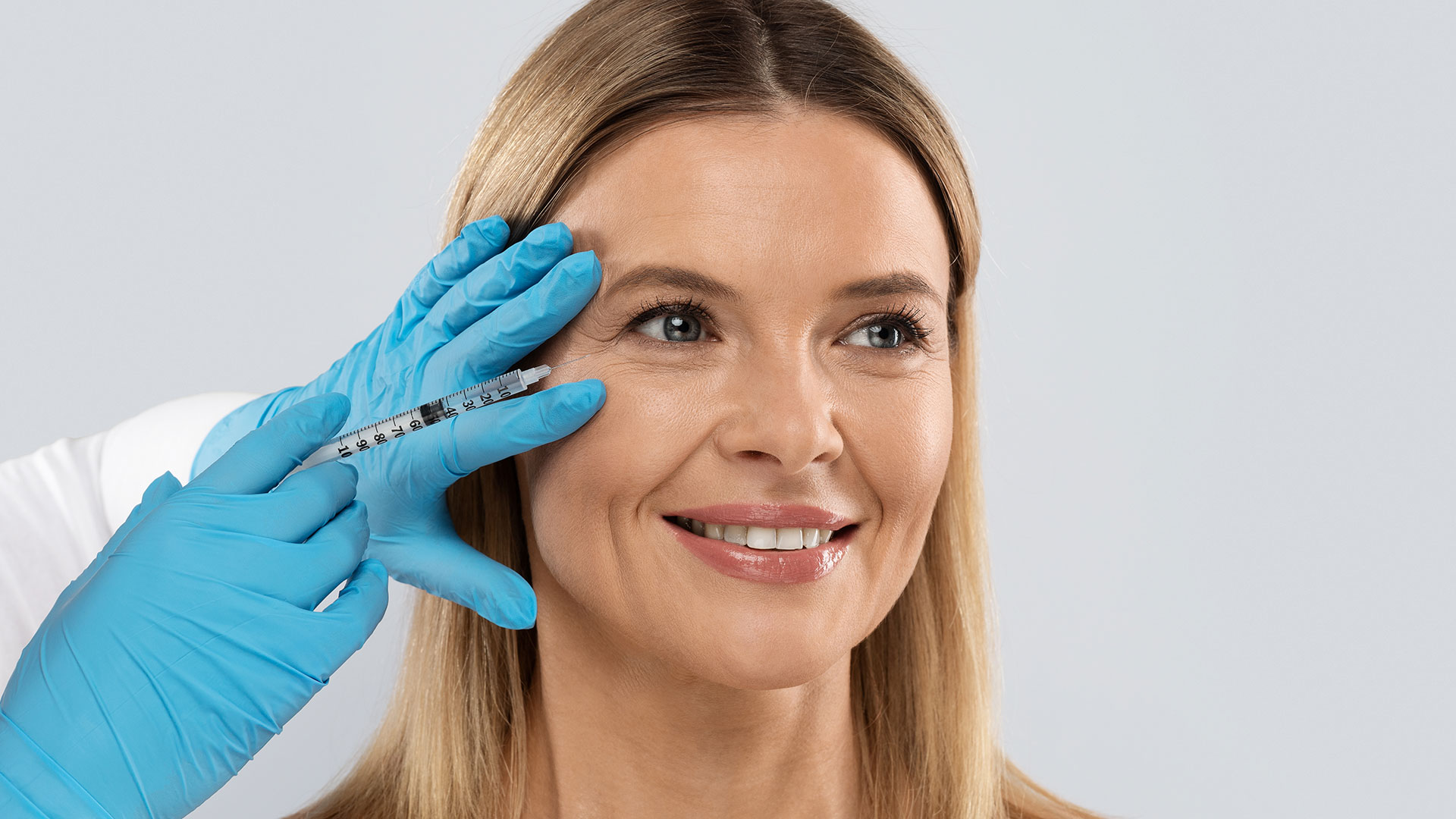
Botox for the Forehead
The forehead is one of the most common areas for Botox treatment. Horizontal forehead lines are mainly caused by repeatedly raising the eyebrows.
With Botox, we can gently reduce the activity of the forehead muscle, which softens forehead wrinkles. Balance is especially important in this area. If the dose is too high or the application is not appropriate, the forehead can feel heavy and the eyebrows may drop slightly.
This is why the goal when treating the forehead is usually not completely immobile skin, but a smoother, more relaxed, and still natural appearance.
Botox for Lines Between the Eyebrows
Wrinkles between the eyebrows are often called glabellar lines, “11 lines,” or “frown lines.” They form due to frowning and can give the face a stern, worried, or tired expression, even when we do not feel that way at all.
Botox is very effective in this area because it relaxes the muscles that pull the eyebrows together and downward. The result can be a more open, friendly, and rested appearance of the upper face.
If the lines between the eyebrows are already very deep and visible even at rest, Botox often softens them, but it may not erase them completely. In such cases, it may take time and several treatments for them to improve.
Botox for Crow's Feet
Crow's feet are fine lines at the outer corners of the eyes. They are most visible when smiling and blinking. In some people, they are a very charming part of facial expression, while in others they can become more pronounced with time and create a tired appearance.
Botox can soften these lines, while still preserving a natural smile. A beautiful result is not one where nothing moves when you smile, but one where the eyes look fresher and the face remains lively.
A Gentle Brow Lift with Botox
In some people, Botox can also create a gentle lift of the outer part of the eyebrows. This is a subtle effect that can slightly open the eyes and refresh the upper face.
However, it is important to emphasize that Botox is not a substitute for a surgical brow lift or eyelid correction when there is significant excess skin. It can, however, be a good option for those with suitable facial anatomy who want a gentle effect.
Botox for Other Areas of the Face
Botox can also be used in certain other areas, such as fine lines on the nose, chin, around the mouth, or in the neck area. These areas require a particularly careful and individualized approach, as excessive muscle relaxation can affect facial expression, smile, or speech.
That is why each patient is first assessed individually to determine whether Botox is truly the best option, or whether another treatment would be more suitable for the desired result.
What Is Baby Botox?
Baby Botox is a gentler form of Botox application. It is not a different substance, but a different approach: smaller doses are used and placed very precisely, with the aim of achieving a subtle effect.
With baby Botox, the face remains more mobile, facial expressions are preserved, and fine lines become less noticeable. This is why it is very popular among people who want a natural appearance and are worried that the result might be too obvious.
Baby Botox can be a good choice for:
- early expression lines,
- younger people considering a preventive approach,
- people trying Botox for the first time,
- those who want a very natural result,
- patients who do not want a “frozen” facial appearance.
What Is the Difference Between Botox and Baby Botox?
The main difference is in the dose and the intensity of the effect.
With classic Botox application, the goal is to relax a specific muscle more noticeably, so the effect on wrinkles is stronger. With baby Botox, the approach is gentler. The muscles are only partially relaxed, so the face remains more dynamic.
This does not mean that one option is better than the other. In a person with strong muscles and pronounced wrinkles, a classic approach may be more suitable. In someone with early fine lines or a desire for a very subtle refresh, baby Botox can be an excellent choice.
The best decision is always made together during the consultation — based on facial expression, muscle strength, wrinkle depth, and the individual's wishes.
Can Botox Also Be Used Preventively?
Botox can also be used preventively, especially in people who are already developing the first fine lines due to strong facial expression. The purpose of preventive treatment is not to change the face, but to reduce repeated skin creasing before wrinkles become more deeply etched.
The preventive approach is often associated with baby Botox, as smaller doses are usually sufficient for early wrinkles. However, it is important that Botox is not performed unnecessarily, but only when there is a meaningful indication for it.
When Does the Effect of Botox Become Visible?
The effect of Botox is not visible immediately. The first changes usually begin to appear after a few days, while the final result is assessed after approximately 10 to 14 days.
During this time, the muscles gradually relax and the lines become softer. In some people, the effect develops more quickly, while in others it takes a little longer, which is completely normal.
How Long Does the Effect of Botox Last?
The effect of Botox most commonly lasts around 3 to 6 months. Its duration depends on several factors, including the individual's metabolism, the strength of the facial muscles, the treated area, the dose, and lifestyle.
In people with very active facial expressions, a faster metabolism, or a very active lifestyle, the effect may sometimes wear off slightly sooner. In others, it may last longer. The regularity of repeated treatments can also influence how long the result remains visible.
As the effect gradually wears off, muscle activity returns. Wrinkles may reappear, but because of the period of reduced muscle activity, they often do not deepen as quickly.
Will My Face Look Unnatural After Botox?
This is one of the most common questions before a first Botox treatment. The fear of a “frozen” face is understandable, but when Botox is applied correctly, the goal is not an immobile face.
Good Botox does not erase personality from the face. Its purpose is to soften the lines that make the face look tired, stern, or worried, while preserving natural facial expression.
An unnatural result is usually caused by an inappropriate facial assessment, an excessive dose, or incorrect application. That is why the treatment should always be planned individually.
Who Is Botox Not Suitable For?
Botox is not suitable for everyone. We do not perform Botox treatments during pregnancy and breastfeeding, in certain neuromuscular diseases such as myasthenia gravis and ALS, or in the presence of active inflammation or infection at the treatment site.
Before the treatment, it is important that you share with us during the consultation any medical conditions, regular medications, allergies, previous aesthetic treatments, and your expectations regarding the result.
Botox or Fillers – What Is the Difference?
Botox and dermal fillers have different purposes. Botox acts on muscles and is mainly suitable for expression lines caused by facial movement. Fillers, on the other hand, replace lost volume, shape facial contours, or fill certain static wrinkles.
For example, forehead lines, lines between the eyebrows, and crow's feet are most commonly treated with Botox. Lip volume, cheek volume, or deeper folds caused by loss of tissue support are more often treated with fillers.
Sometimes the best result is achieved with a combination of different methods, but the treatment plan must always be tailored to the individual.
How Does the Procedure Work?
The procedure is short and usually takes only a few minutes. Before application, the doctor assesses facial expression, facial symmetry, muscle strength, and wrinkle depth. Botulinum toxin is then injected into selected points using a very fine needle.
After the procedure, mild redness, slight swelling, or a small bruise may appear at the injection site, but this usually resolves quickly. Most people can return to their daily activities immediately.
After the treatment, it is usually advised not to massage the treated area for several hours and to avoid intense physical activity, sauna, swimming pool, and alcohol on the same day, while also following the doctor's instructions.
Conclusion
Botox is an effective non-surgical treatment for softening expression lines and refreshing the appearance of the face. It is most commonly used on the forehead, between the eyebrows, and around the eyes, but it may also be used in other selected areas when appropriate.
Baby Botox is a gentler approach, suitable for anyone who wants a subtle, natural result with preserved facial expression. The most beautiful results are achieved when the treatment is adapted to facial anatomy, expression, and individual wishes.
At Klinika Višnjar, we perform an individual assessment of your facial expression, facial anatomy, and aesthetic goals before the treatment. Together with you, we choose the approach that enables a fresh, rested, and natural appearance.
Book your consultation here.
The application is not painful. We use very fine needles, so most people feel only a brief pinprick sensation.
Yes, most people can return to their usual activities immediately. Mild redness at the injection sites may occur, but it usually disappears quickly.
Because lower doses are used with baby Botox, the effect may be slightly shorter or more subtle in some people. However, the duration depends on each individual.
Botox works best on dynamic expression lines. If wrinkles are already deeply etched and present even at rest — meaning they are static — Botox can soften them, but it does not always erase them completely.
No. When the effect of Botox wears off, muscle activity gradually returns. Wrinkles may reappear, but they do not worsen because of Botox itself.